![]() |
| Taking a moment to stretch the wings |
Friday, July 4, 2014
Burrowing owls- What'chu lookin at?
Hello from Florida! It is hot, hot, hot! And that would be why I am sitting in the nice cool air-conditioned house! haha. Here are a few photos of the incredibly adorable burrowing owls (Athene cunicularia) in Cape Coral. They are a protected species and they sure act like they know it. They are not phased by people. They just stay on their perches or on the ground by their burrows.
Thursday, June 12, 2014
Ready for a bunch of photos?
Memorial day (and the following day too) I spent my mornings at San Joaquin Wildlife Sanctuary in Irvine. there were not that many birds- compared to winter when many birds stop over for the warmer weather, but the quality of the birds was wonderful! There were avocet, stilt and mallard chicks, which was a true treat.
![]() |
| American avocet (Recurvirostra americana) |
![]() |
| American avocet (Recurvirostra americana) chasing mallard chicks (Anas platyrhynchos)! |
![]() |
| Female ruddy duck (Oxyura jamaicensis) |
![]() |
| Tree swallows (Tachycineta bicolor) |
![]() |
| American avocet (Recurvirostra americana) with chick and a photo-bombing tree swallow. |
![]() |
| American avocet (Recurvirostra americana) with a chick |
![]() |
| American avocet (Recurvirostra americana) |
![]() |
| American avocet (Recurvirostra americana) |
![]() |
| American avocet (Recurvirostra americana) drying off. |
![]() |
| American avocet (Recurvirostra americana) |
![]() |
| American avocet chick (Recurvirostra americana) |
![]() |
| American avocet chick (Recurvirostra americana) |
![]() |
| Black-necked stilt (Himantopus mexicanus) |
![]() |
| Black-necked stilt (Himantopus mexicanus) with chick |
![]() |
| Black-necked stilt (Himantopus mexicanus) with chick |
![]() |
| Killdeer (Charadrius vociferus) |
![]() |
| Mallard mom and chick (Anas platyrhynchos) |
![]() |
| Mallard chick (Anas platyrhynchos) drying off. Or maybe doing a little dance. |
![]() |
| Ring-necked duck (Aythya collaris) |
![]() |
| Ring-necked duck (Aythya collaris) |
![]() |
| Ring-necked duck (Aythya collaris) |
![]() |
| Ring-necked duck (Aythya collaris) |
![]() |
| Ring-necked duck (Aythya collaris) |
![]() |
| Black-necked stilt (Himantopus mexicanus) chasing mallard chicks (Anas platyrhynchos) |
![]() |
| Black-necked stilt (Himantopus mexicanus) chasing mallard chicks (Anas platyrhynchos). Mom mallard was not thrilled and would chase the stilt away when possible. |
![]() |
| Western fence lizard (Sceloporus occidentalis) soaking up some sun. |
Wednesday, June 11, 2014
A few foggy mornings in Morro Harbor
So like I said in the last post, I had a week with a 600mm F4 lens. I tried to get out as much as possible. Day 2 and 3 of the lens was spent in Morro Bay with the sea otters and other harbor wildlife.
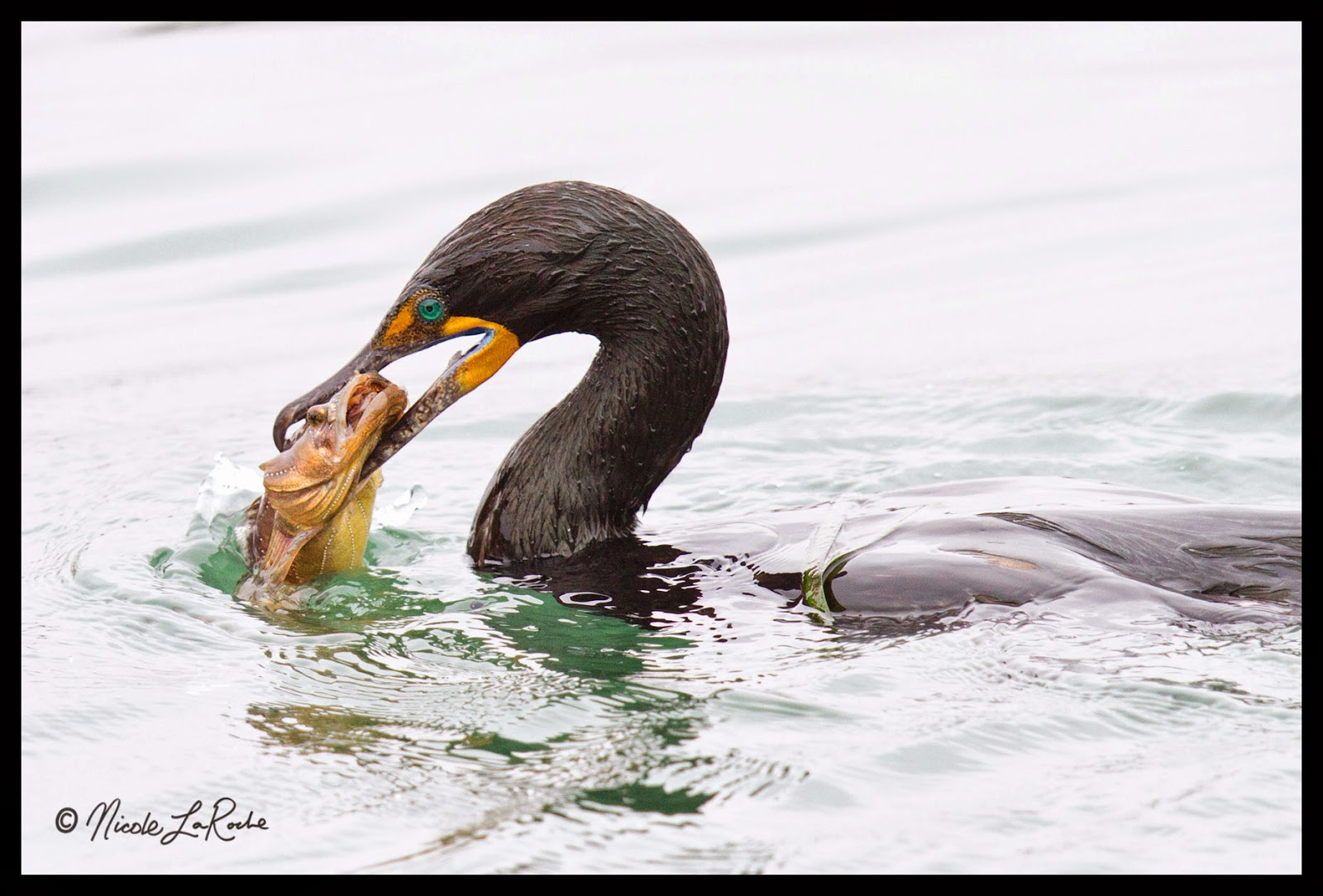
I'll start this post with a photo of a cormorant. There were a few cormorants fishing and coming up with fish after fish! I sometimes wonder where all of that food goes!?! Sea otters are not the only ones who eat a whole lot of food. Double-crested cormorants can eat up to a pound of fish per day!
The rest of the photos are of sea otters. There are many reasons why I like sea otters, but I can tell you why, when I am not working, I am watching otters- they are always interesting! Below are some of my favorite sea otter behaviors. There are a few of my favorites missing, but if I could see them all in one day, it wouldn't be as fun!
The next two photos are part of a behavior that shows that all animals find ways to cheat the system. Prey stealing is a common thing with sea otters, but commonly we see males stealing from females (yet another reason why I would never want to be a female sea otter!). But this particular steal that is shown below was one female stealing from another! It is not that uncommon, but I am always surprised when I see it.
I'll start this post with a photo of a cormorant. There were a few cormorants fishing and coming up with fish after fish! I sometimes wonder where all of that food goes!?! Sea otters are not the only ones who eat a whole lot of food. Double-crested cormorants can eat up to a pound of fish per day!
![]() |
| Double-crested cormorant (Phalacrocorax auritus) with a plainfin midshipman (Porichthys notatus). |
The rest of the photos are of sea otters. There are many reasons why I like sea otters, but I can tell you why, when I am not working, I am watching otters- they are always interesting! Below are some of my favorite sea otter behaviors. There are a few of my favorites missing, but if I could see them all in one day, it wouldn't be as fun!
![]() |
| Sea otter (Enhydra lutris) mom and pup resting. |
![]() |
| Sea otter (Enhydra lutris) mom and pup. Well, hello to you too! |
![]() |
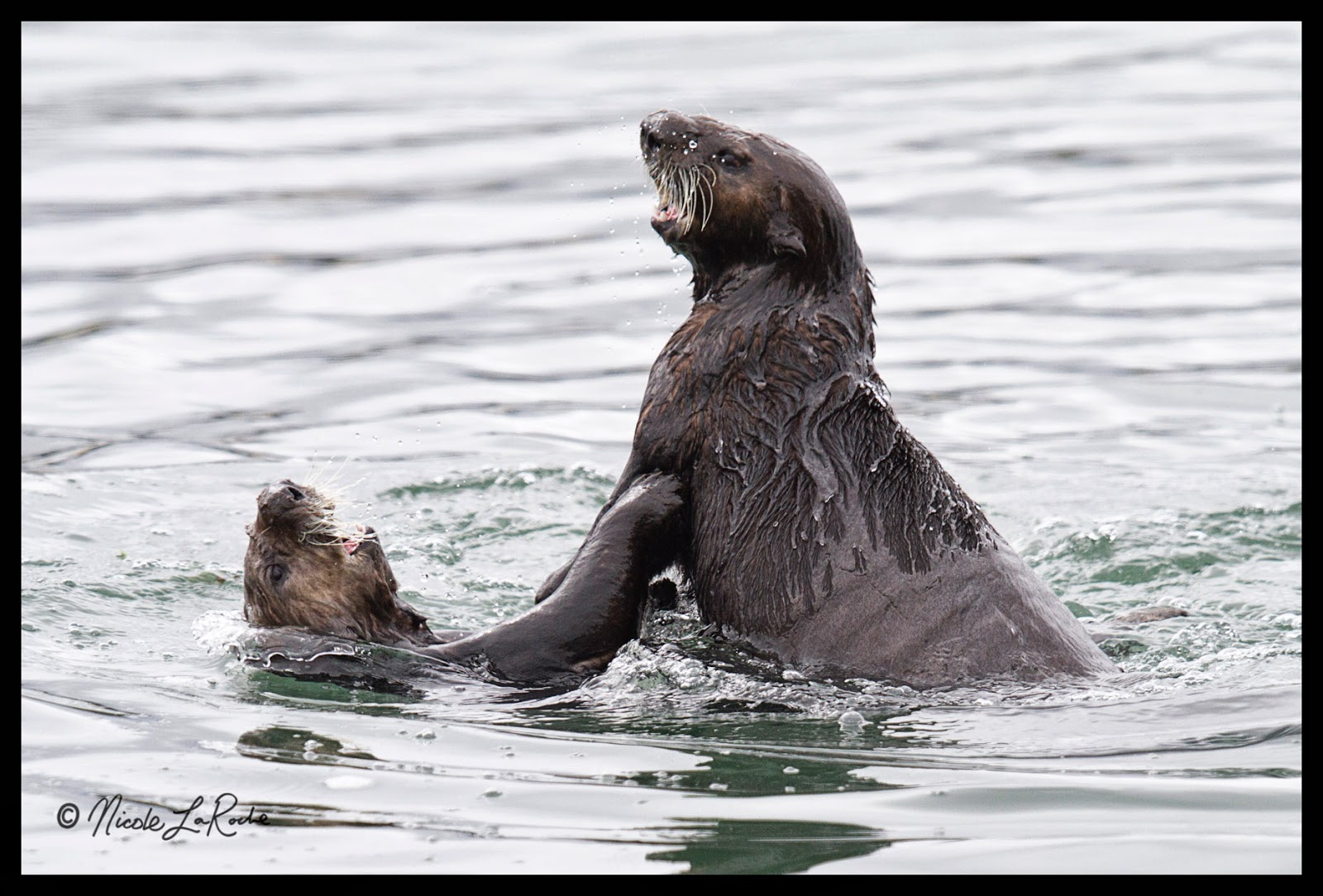
| Two young sea otters (Enhydra lutris) in a bit of a brawl. |
![]() |
| Sea otter (Enhydra lutris) with a sheep crab (Loxorhynchus grandis) |
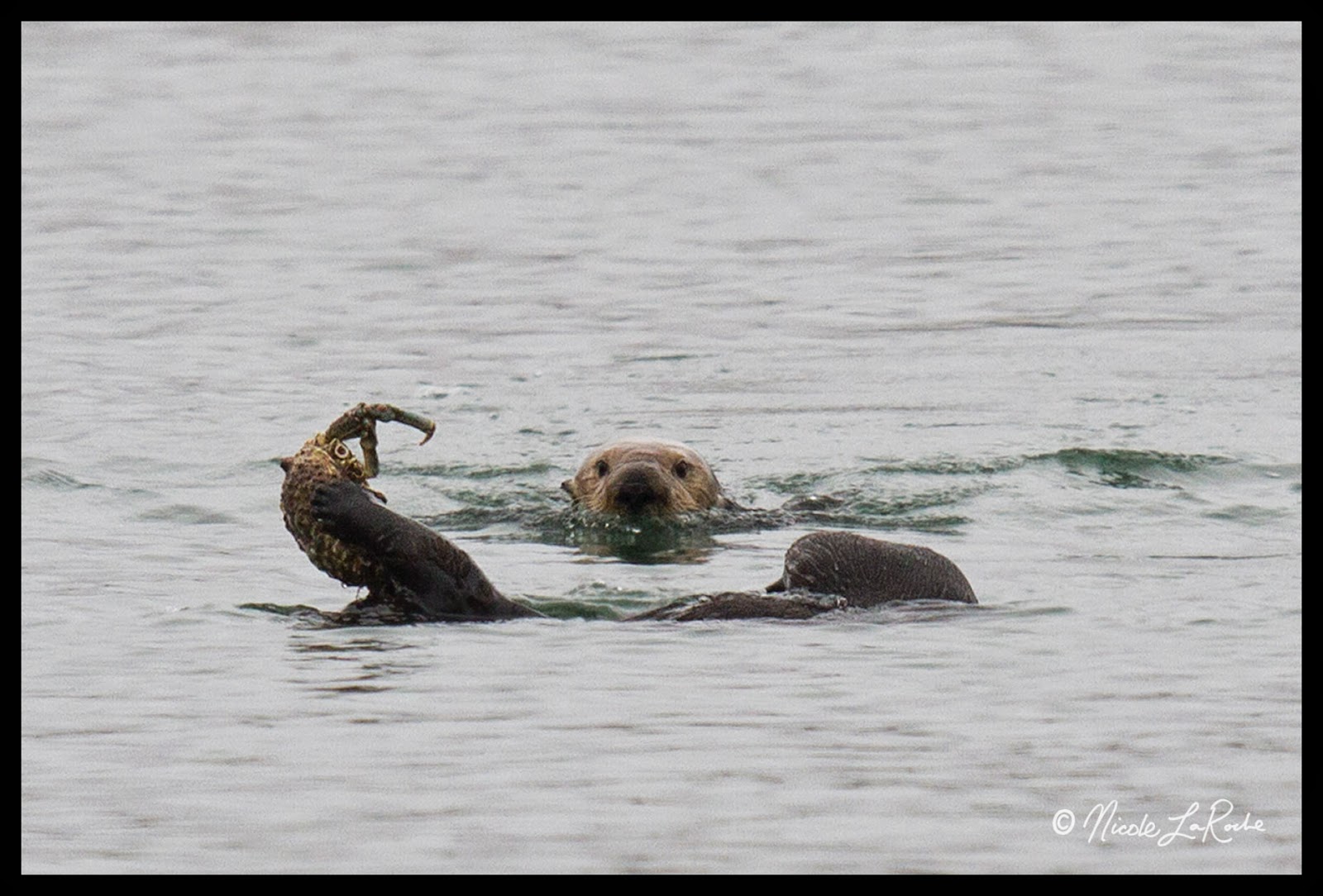
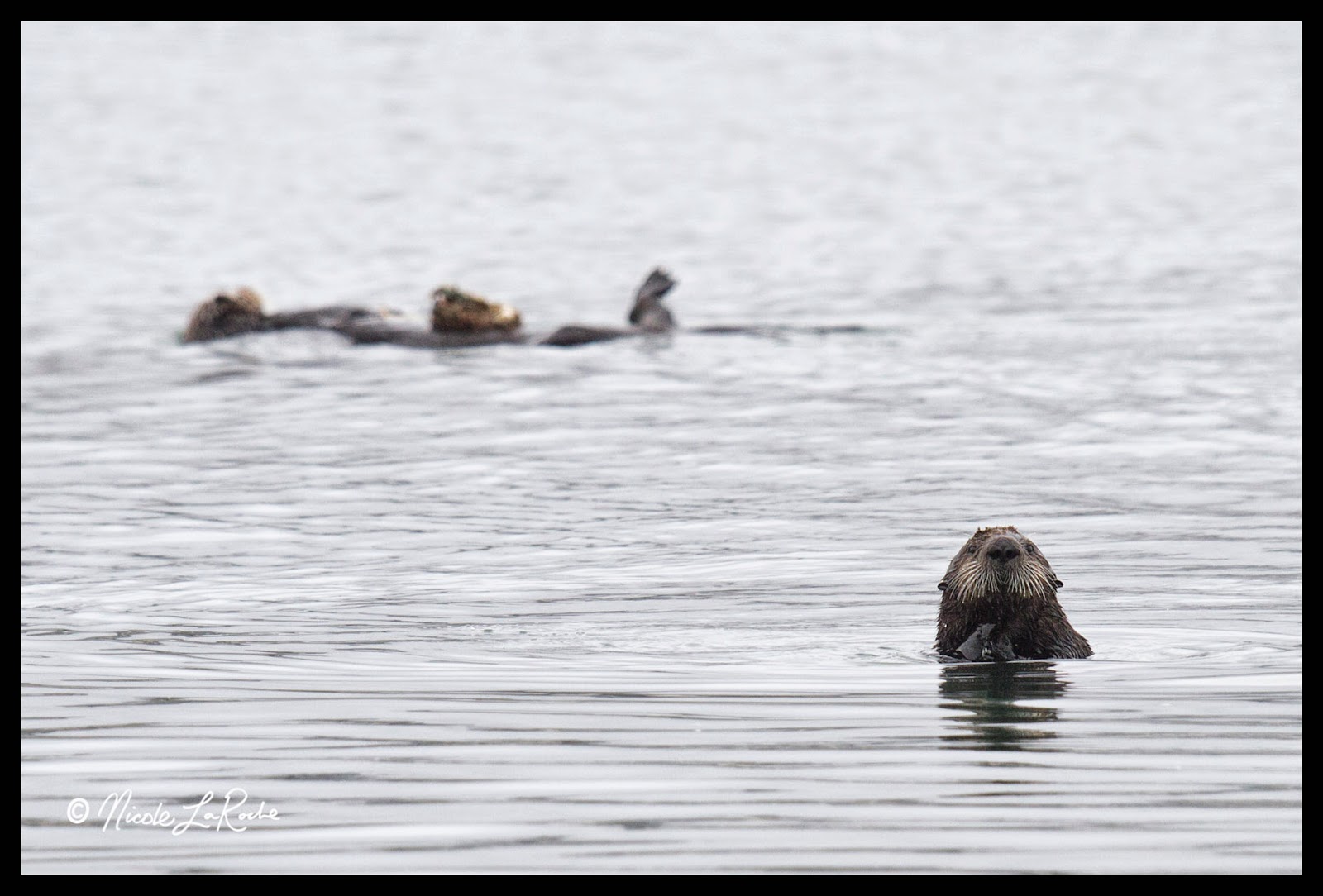
The next two photos are part of a behavior that shows that all animals find ways to cheat the system. Prey stealing is a common thing with sea otters, but commonly we see males stealing from females (yet another reason why I would never want to be a female sea otter!). But this particular steal that is shown below was one female stealing from another! It is not that uncommon, but I am always surprised when I see it.
![]() |
| Sea otter (Enhydra lutris) with a sheep crab (Loxorhynchus grandis) that is about to be stolen by another otter. |
![]() |
| The moment after the steal. The prey-less otter is in the foreground. Kind of looks disheartened. |
Monday, June 9, 2014
Spring is chick season
Here are some photos from 2 weeks ago (I'm getting a little better with the posting speed!) I spent some time at the bird refuge in Santa Barbara and was in love with the mallard chicks. I was borrowing a 600mm F4 lens for the week and this was my first day using the lens. It was my "practice day".
Here is a photo of the lens I was using:
![]() |
| Mallard (Anas platyrhynchos) drying off. |
![]() |
| Mallard (Anas platyrhynchos) chick looking for some food. |
![]() |
| Mallard (Anas platyrhynchos) chick. |
![]() |
| Mallard (Anas platyrhynchos) chicks feeding on an emergent pole. |
![]() |
| Ruddy duck (Oxyura jamaicensis). |
Wednesday, May 28, 2014
Cetaceans in Central California
Here is the second post of cetaceans. This one is more recent. These pictures of gray whale calves and bottlenose dolphins from Estero Point. (Estero point is just north of Morro Bay) This day in particular there were several whales and dolphins loitering in the near-shore area inside of the kelp line. They were fun to watch! (More fun than the otter that we were watching, who was sleeping!)
And, just like the last cetacean post, I'll end with a non-cetacean species.
![]() |
| Bottlenose dolphins (Tursiops truncatus) giving us a show |
![]() |
| Bottlenose dolphins (Tursiops truncatus) giving us a show. |
![]() |
| Gray whale mom and two calves (Eschrichtius robustus). There were two mom/calf pairs hanging out together. In this photos the two calves have their heads resting on one of the moms. |
![]() |
| Gray whale calf (Eschrichtius robustus) spyhopping with a bottlenose dolphin (Tursiops truncatus) in the foreground. Notice the size difference! |
![]() |
| Gray whale calf (Eschrichtius robustus) fluke. |
![]() |
| Gray whale calf (Eschrichtius robustus) fluke. |
And, just like the last cetacean post, I'll end with a non-cetacean species.
![]() |
| Sea otter (Enhydra lutris) grooming in Moss Landing |
Tuesday, May 20, 2014
A coyote on the beach
Subscribe to:
Posts (Atom)


