Showing posts with label gray whale. Show all posts

Wednesday, May 28, 2014

Cetaceans in Central California

Here is the second post of cetaceans. This one is more recent. These pictures of gray whale calves and bottlenose dolphins from Estero Point. (Estero point is just north of Morro Bay) This day in particular there were several whales and dolphins loitering in the near-shore area inside of the kelp line. They were fun to watch! (More fun than the otter that we were watching, who was sleeping!)

Bottlenose dolphins (Tursiops truncatus) giving us a show

Bottlenose dolphins (Tursiops truncatus) giving us a show.
Gray whale mom and two calves (Eschrichtius robustus). There were two mom/calf pairs hanging out together. In this photos the two calves have their heads resting on one of the moms.
Gray whale calf (Eschrichtius robustus) spyhopping with a bottlenose dolphin (Tursiops truncatus) in the foreground. Notice the size difference!
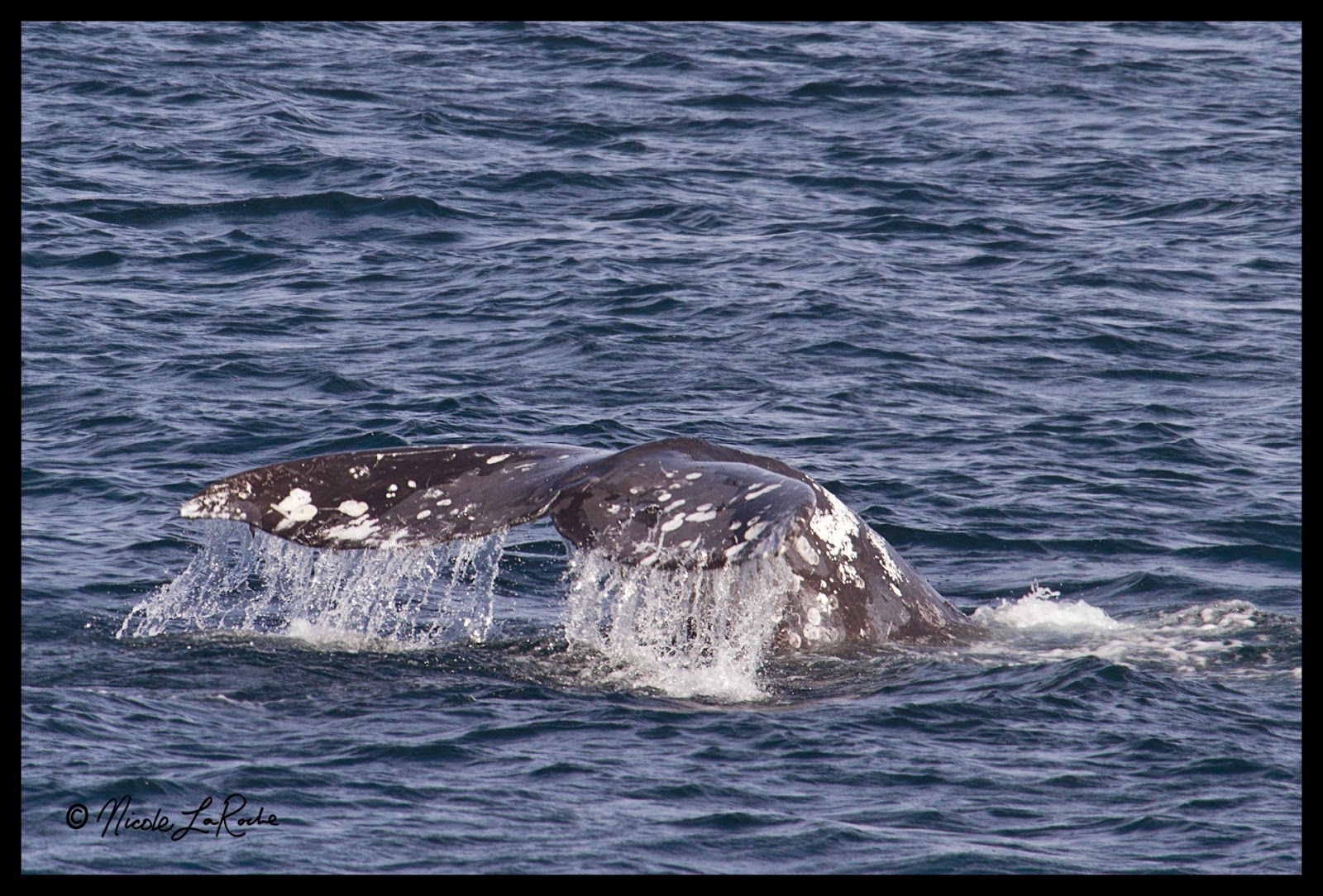
Gray whale calf (Eschrichtius robustus) fluke.

 And, just like the last cetacean post, I'll end with a non-cetacean species.
Sea otter (Enhydra lutris) grooming in Moss Landing

Sunday, May 18, 2014

Cetaceans in the Santa Barbara Channel (Part 1)

Another delayed post! This is from the beginning of 2014. I have just finished editing some cetacean photos from last week as well. Those will be the 'Cetaceans part 2' to be posted in a few days.

Common dolphin adult and calf (Delphinus delphis)

Common dolphins (Delphinus delphis)

Gray whale (Eschrichtius robustus)

California sea lions (Zalophus californianus)

Wednesday, May 16, 2012

Gray whales movin' on up the coast

The first two photos today are of the migrating gray whales traveling north to their feeding grounds in Alaska. This is the tail end of the migration which means it is mostly moms with their new calves. These pairs typically stay very close to shore to avoid predation by orcas. The photo below is of the calf surfacing with the mom behind. The second photo was of particularly noticeable (and entertaining to me) spot on her back. 


Below is a California quail at Gaviota State park. It is about time for quail chicks, but I haven't seen any yet. Quail chicks could be one of my favorite animals to watch!


Tuesday, December 27, 2011

The last post of 2011

On December 23rd I got to see something that I have been wanting to see for years. It was at the top of my "to see" list. I saw an attack on gray whales by a pod of orcas. There were 4 orcas (and one was a calf) and 2 adult gray whales. The numbers were certainly in favor of the grays and they did win the battle.

I was working at the North end of our study range at Sea Lion Cove and waiting for a sleeping otter to show me her flipper tags. She was dead asleep and I figured I would be there a while so I pulled my camera out to take some hummingbird photos. (previous posts have photos of hummingbirds from this very spot!) While looking offshore I was thinking to myself, this feels like and orca kind of day. The ocean was flat and you could see for miles. About 5 minutes after I thought about the orcas I saw some splashing close to shore. I looked down and saw 2 gray whales on their backs. I thought maybe they were mating. Although most grey whale mating behavior happens far south of us in Baja Mexico, I have seen mating along their travel route a few times.
I started taking some photos of them and then realized there was a dolphin dorsal fin right by the gray's head. I looked a little closer and saw the white saddle patch (a telling characteristic of orcas). I kept taking photos, but was so excited that I was jumping up and down and actually for once, hoping that tourists would stop and I could tell them what was going on. The encounter only lasted about 7 minutes and the orca pod started swimming south and offshore. The grays were underwater for a long time and appeared to 'wrangle up' some more whales that were on their way south. Soon there were 5 grays all swimming together within 200 meters of shore- often through the kelp. Just south of their current location is a deep canyon and this is where it would be easiest for orcas to attack. Often when the mothers and calves are traveling north there are attacks in the deep canyons off Monterey and Carmel.

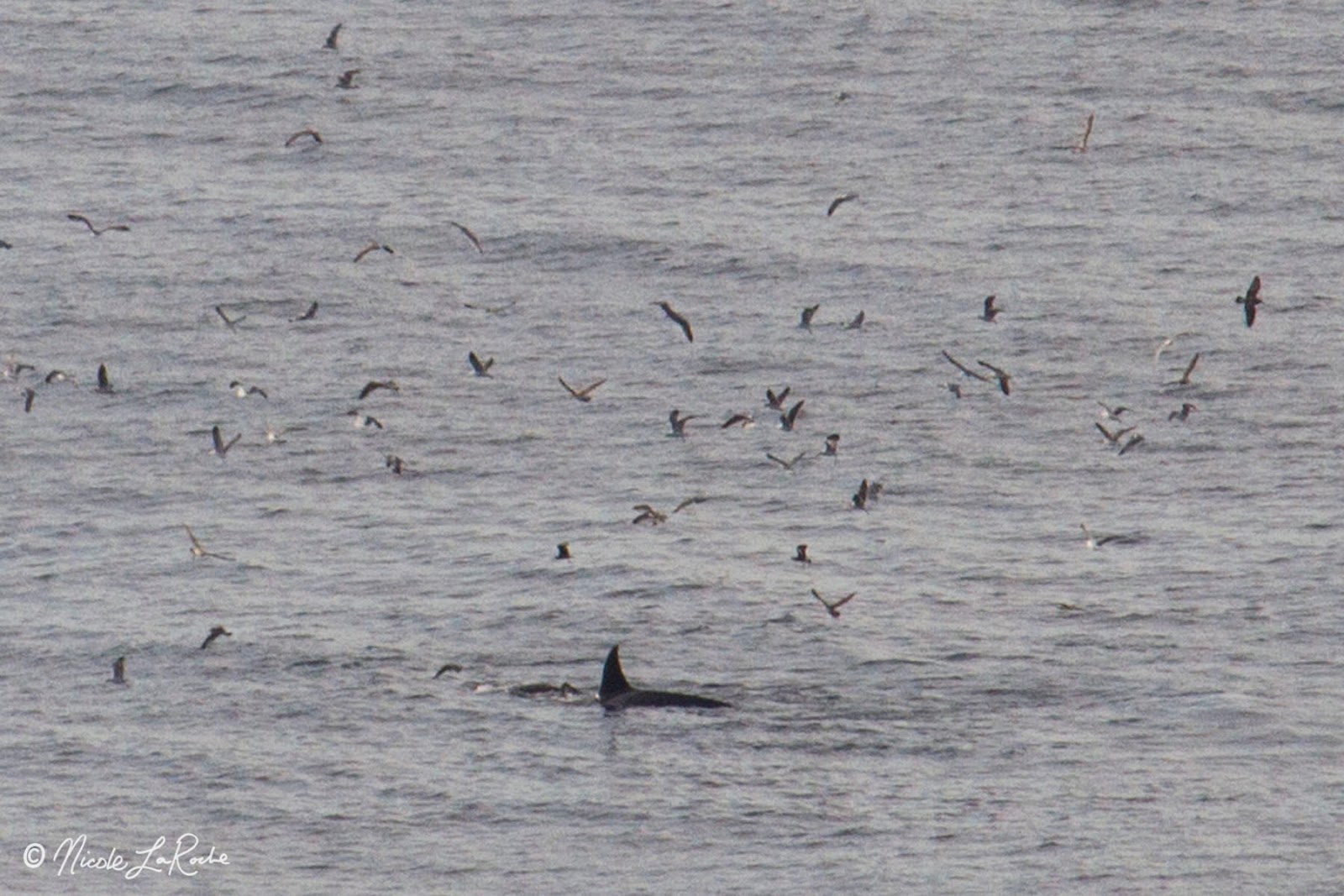
After the orcas swam offshore, I believe they got a sea lion (a little easier breakfast option that a 40 foot long gray whale) and I took some photos but at this point they were about a mile offshore so the quality is not as good.

Gray whale on its back with orcas swimming underneath.
Mom and calf orca on the left side, one orca underwater and the gray whale coming up for air.
Mom and calf orca on the left, two gray whales up for air.

gray whale spouting

gray whale fluke.
After the attack the grays started back south but were swimming very close to one another and close to shore.
Orca breaching (about a mile offshore)

Orca slapping her tail.

Orca- Possibly with a sea lion, they were about a mile offshore of Torre canyon.